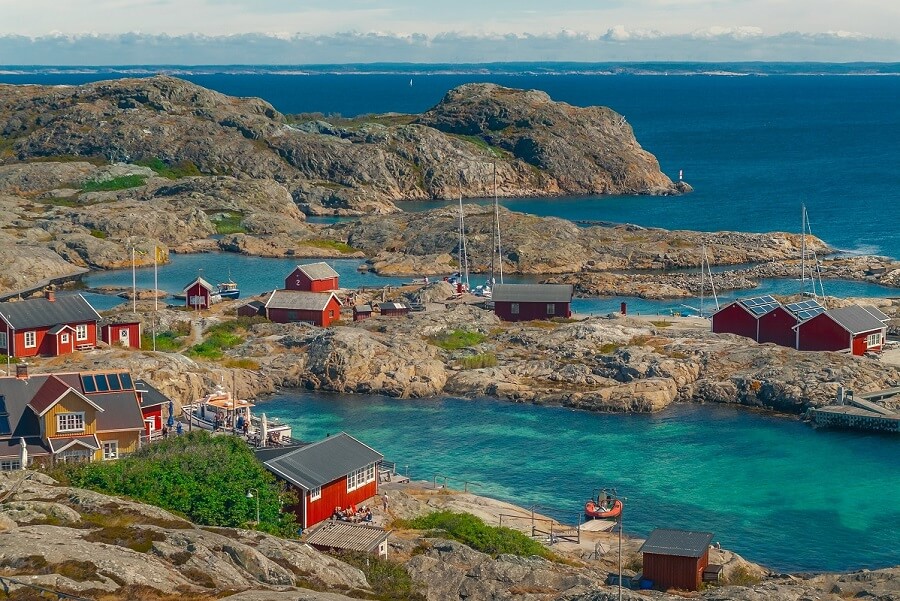
Mile builder from Germany to Norway. Out of the Baltic through the Kiel Canal, past the Frisian Islands, and then a 240-mile crossing of the open North Sea and Skagerrak to southern Norway. Night watches, frontal weather, and the quiet satisfaction of slipping into Oslo under your own keel. Perfect trip for logging the offshore miles needed for RYA.
Highlights
Dates
- Start: 15 August 2026 (Saturday, 11:00) at Flensburg, Germany. Joining from Kiel, at the entrance to the Kiel Canal (waiting pontoon at the Holtenau lock), morning on the 16th of August is also possible.
- Finish: 22 August 2026 (Saturday, 09:00) at Oslo, Norway.
The start and end dates are fixed.
Contribution
The whole trip (8 days) per person:
- 880 Euro for a bunk. The deposit (50% of the balance) is to be paid within one week of booking, and the remaining balance is due 35 days before the start date.
- 150 Euro (15 Euro / day) for consumables. For all food consumed onboard, harbour fees and diesel. This is a realistic estimation. Any remainder will be refunded at the end of the trip.
The trip is non-commercial and runs in a friends-sailing manner. The contribution per person is fixed no matter how many people have booked the trip. The trip will run regardless of the number of participants.
What is included:
- Professional skipper and instructor
- Fully equipped boat for offshore sailing
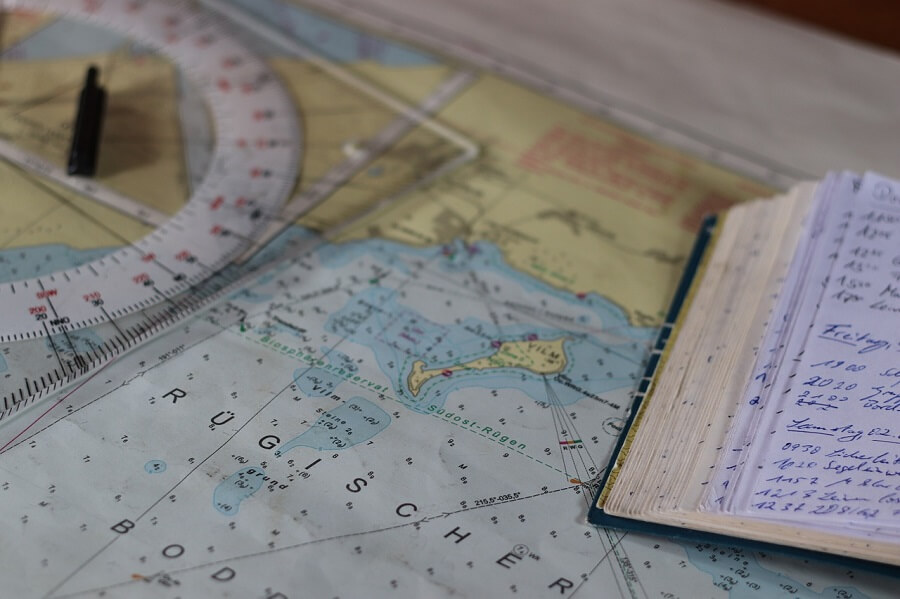
- Up to date digital and paper charts covering the whole sailing area (passage and detailed charts)
- Pillows, bedlinen and towels for each crew member
- Gas bottles
- Pneumatic life jackets
- Own bunk
- Professional weather forecasting and routing software
What is not included:
- Optional expenses like rental vehicles or food & beverages consumed ashore
- Travel to and from the boat
- Personal travel insurance (recommended) - you can find some recommendations in the FAQ
- Personal laundry (some ports have facilities to do laundry if you need it)
How much to bring in addition?
Generally, you won’t need anything in addition, but this will depend on how much you want to eat in restaurants and spend on other things like souvenirs and tourist attractions. Some people prefer to eat only on the boat and don’t spend anything on restaurants and some prefer to eat outside whenever we are on land. This is very individual.
Who can join
It is recommended to have at least 1 week of offshore sailing experience to join the trip.
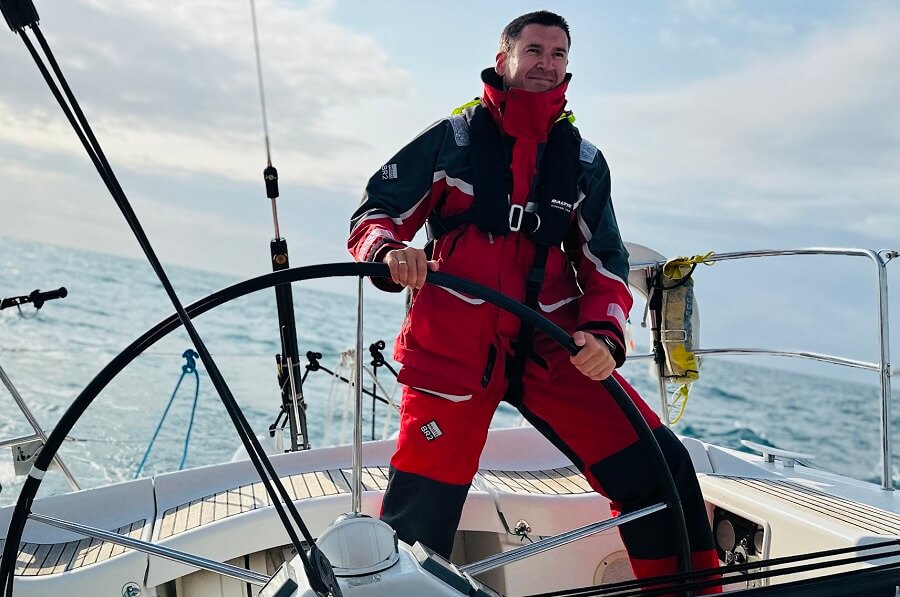
You will become an active member of the crew. You will not be just a passenger or a guest. During the voyage you will assist with helming, sail trimming, cooking and all the normal duties of a crew member whilst having the opportunity to learn about weather, routing, navigation, boat handling and much more according to your interests and experience. Above all, it should be fun and recreational for everyone.
In the course of the trip we will maintain a watch system and we will sail during the night. Therefore, there is no fixed lights-off time and your sleeping rhythm will likely be different than at home.
Our main language on board is English. If English is not your native language, and you don’t know the English sailing terms, don’t worry. You will learn the necessary vocabulary in no time while on board.
Not sure if it’s for you? It is completely normal to feel a little nervous before a trip like this — you would be surprised how many confident-looking people arrive feeling the same. For most, those worries quickly fall away once they step aboard. If you are unsure whether this trip is the right fit, or you have any worries at all, just get in touch. We will have a relaxed chat before you commit, go through the trip together, and work out whether it suits you and what you would most like to get out of it. You can also have a look at our FAQ.
Travel logistics
How to get to Flensburg
There are flights to Hamburg.
You can find the best flight connections using the following websites:
There is a fast direct train from Hamburg to Flensburg (2h). Trains can be booked in Deutsche Bahn.
How to travel from Oslo
Oslo has many international flights.
Let us know, we can help you find the best connections!
Skipper
Marcin Wojtyczka: RYA Yachtmaster Ocean commercially endorsed, RYA Yachtmaster Cruising Instructor, MCA Master 200 GT Unlimited (Code Vessels less than 200GT / OOW Yachts less than 500GT)
What should you pack
You can download a complete checklist here.
The most important items are:
- head torch for night sailing
- boat shoes with a good grip that don’t leave marks on the deck
- foul weather gear (if you have one), otherwise waterproof jacket
- some warmer clothes
- passport
- insurance policy
- payment/credit cards
- phone with charger
- toiletries
Note that there will be bedlinen (pillows, blankets/duvet) on board. For additional comfort, sleeping bag is recommended.
The trip will be focused on cruising and training. In total, we should log up to 600 nautical miles and 100h in tidal waters.
Anticipated route:
Flensburg (Germany) - Kiel Canal (Germany) - Sylt Island (Germany) - Kristiansand (Norway) - Blindleia (Norway) - Oslo (Norway)
We will try to follow the planned route, but the final itinerary will be decided in association with you and the crew, in light of the weather, boat and crew conditions at the time. Therefore, the number of ports we visit, and the amount of nautical miles or hours sailed may differ from what is stated in the description.
We will be maintaining a watch system to ensure everyone is well rested and meals are prepared on time and maintenance is undertaken when necessary. There will be 3 watches with up to 2 people in each watch.
Bavaria C38, 2023
The boat is a performance cruiser. It has excellent sailing characteristics. She is well equipped and prepared for offshore sailing.
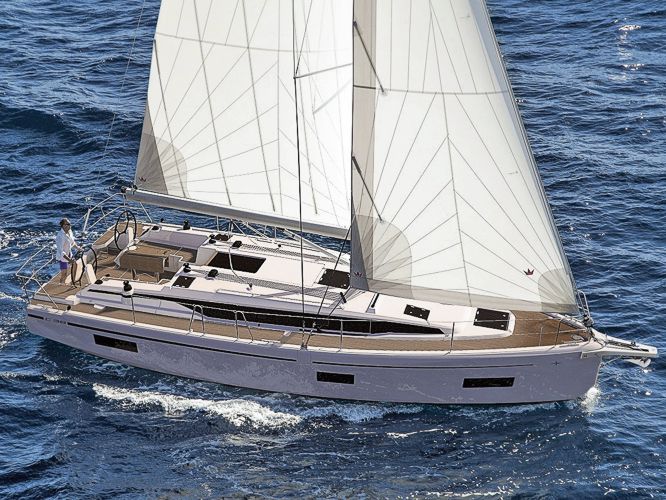
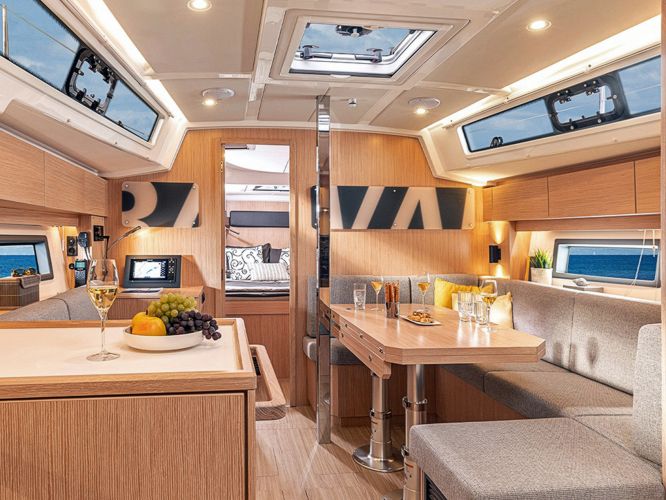
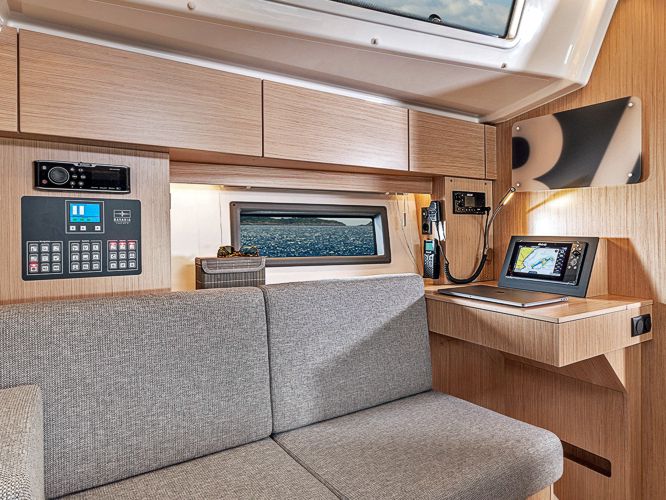
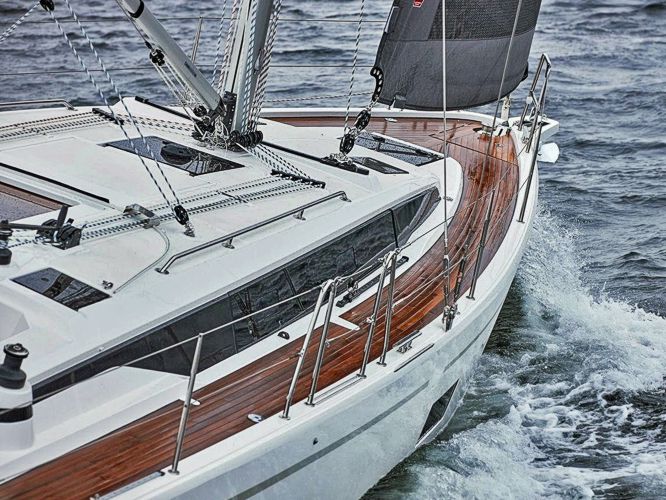
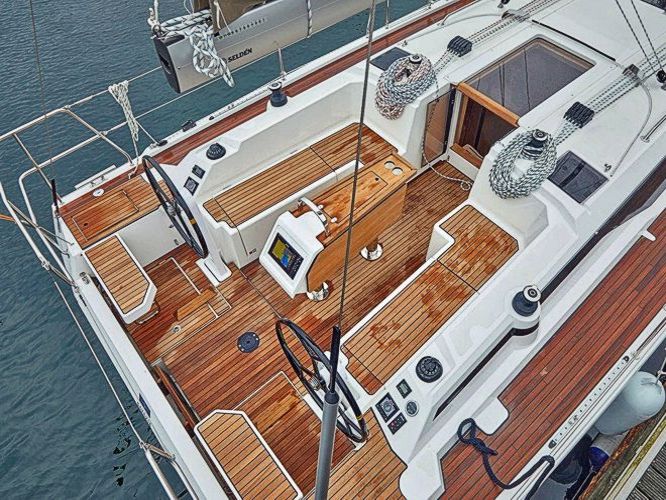
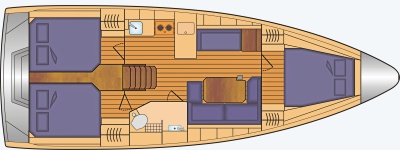
We will inspect the boat thoroughly before the voyage to ensure that every bit of equipment is absolutely ship-shaped.
General info:
- Year: 2023
- Type: sailing
- Hull: monohull
- Length (LOA): 11.90 m
- Waterline length (LWL): 10.28 m
- Hull speed: 8.8kt
- Berths (Bunks): 6+2
- Cabins: 3
- WC / Shower: 1
- Beam: 3.98 m
- Draught: 1.65 m
- Air draft: 18.6 m
- Engine: 40 PS Volvo
- Fuel capacity: 210 L (Diesel)
- Water capacity: 210 L
- Displacement: 9.3 t
- Single spade rudder
- 2 steering wheels
- Sails: Fully battened Mainsail 42.80 m2, Furling genoa 27.00 m2, Asymmetric Spinnaker: 121.00 m2, Storm Jib 9.00 m2
- Plastimo drogue
Equipment:
- Autopilot
- Swimming platform
- Refrigerator
- Stove
- Sprayhood
- Radio/CD/MP3
- Socket 12V
- DSC VHF radio
- Handheld VHF DSC radio
- EPIRB
- AIS
- Radar reflector
- Chart plotter with GPS and digital chartography charts
- Sextant Astra IIIB Deluxe
- PredictWind Offshore app
- Complete set of pilot books, almanacs and charts
- Pillows, bedlinen and towels for each crew member
Average weather conditions:
Air and Sea temperature
The weather conditions in August are generally favorable for sailing with relatively mild temperatures and moderate winds. The average temperature during the day should be around 19° C, with a minimum of 12° C and a maximum of 24° C. The sea temperature can be up to 19° C and it should be possible to swim in the sea.
Wind and sea state
The average wind speed in that area in August is 5-6 Bft. The sailing area is located at relatively high latitudes, and frontal depressions are not uncommon.
The majority of the trip will be on the exposed North Sea coast where moderate to rough sea state is to be expected.
This is a mile builder trip. The route is divided into several offshore passages with lots of night sailing. You will receive a certificate of passage to prove your sea time for sailing licenses. You will be an active member of the crew, and we will provide practical training on board to ensure safety and improve your sailing skills.
We give a great amount of responsibility to each crew member in running the ship so that you can gain valuable experience and learn new skills as much or as little as you want. The skipper is an instructor and will find it difficult not to teach or coach anyone who shows the slightest bit of interest.
RYA qualifying passages
If you are an aspiring Skipper or Yachtmaster, it will be an excellent opportunity to gain bluewater miles, practice navigation, pilotage and ColReg skills so that you can be more confident and comfortable when taking a boat out to sea on your own. During the voyage, we can evaluate your current knowledge and provide suggestions for improvement. We can evaluate whether you are at the right level to pass an RYA exam and practice any gaps in your knowledge.
The opportunity will also be there to act as a skipper (with guidance if needed from the skipper) for your RYA Yachtmaster Coastal or RYA Yachtmaster Offshore qualifying 60M passages.
Main topics that you can learn or brush up:
- Maneuvering under sails & engine: berthing, hoisting and lowering sails, reefing, tacking, gybing, sail trim
- Safety: use of liferaft, lifejacket, EPIRB, PLB, AIS beacons, managing emergencies
- Equipment: use of Autopilot and VHF
- Weather forecasts and weather routing
- Offshore & coastal navigation: digital and traditional (including the use of Sextant if of interest)
- Night navigation
- Pilotage and passage planning
- ColRegs
- Storm tactics and use of a drogue
- Use of Asymmetric Spinnaker and Storm Jib
- Life on board: organization of watches, nutrition, sleep and risk management
Celestial navigation
Although this is not an ocean trip, you will have a chance to try celestial navigation in practice, the oldest and most technical form of navigation. You can learn how to use a sextant and how to calculate your own position using the sun, planets, moon and stars.
We will try to follow the planned route, but at the sea, we need to remain flexible as we cannot plan and anticipate everything. Therefore, your expectation might might differ from what you experience, subject to weather, boat and crew conditions, and what the majority of the crew wants.
Joining day - Flensburg
We will spend the first day preparing and victualling the yacht, going over the safety routines and practices, getting up to speed with the boat and learning or refreshing all the basic sailing skills before we embark on the journey. Once we slip the lines there will be plenty of occasions to practice tacking, gybing, reefing, boat handling under the engine and all the other key skills we must have.
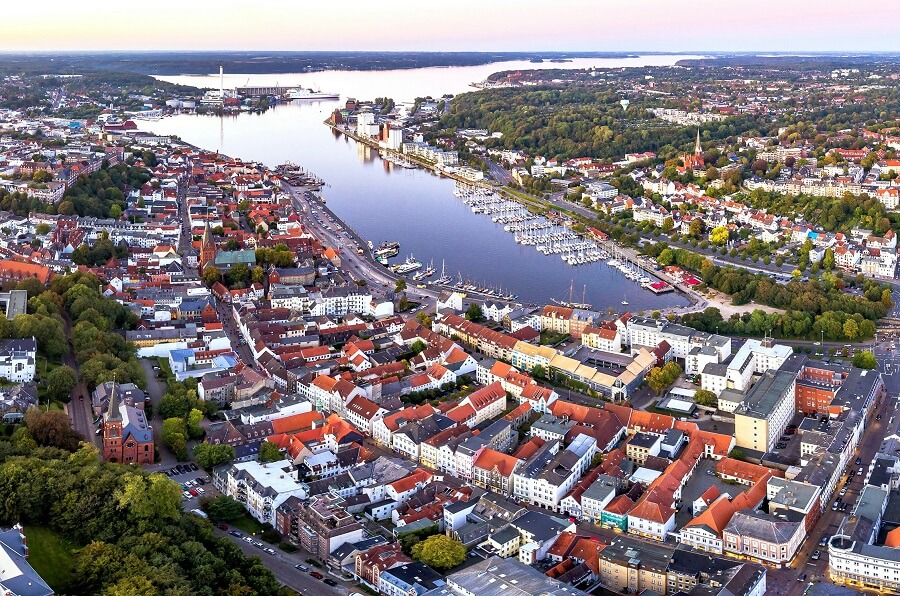
Flensburg
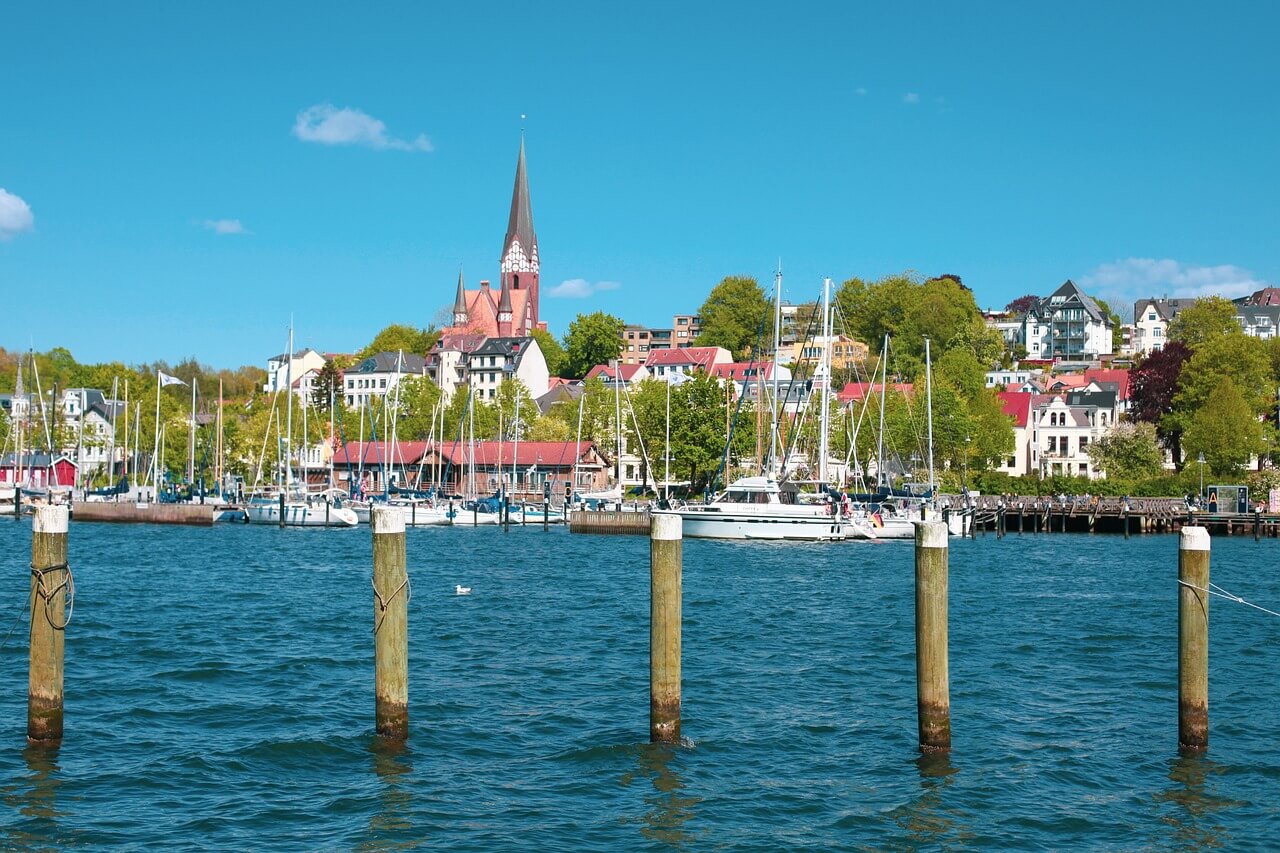
Flensburg Marina
Flensburg is a historic port and town with a mixture of Danish and German history and culture. It enjoys the unique privilege of being a gateway to Scandinavia. A tradition from the days when the city belonged to Denmark was the production of rum. Flensburg is also known for its beer and Danish feel. It is located on the Baltic coast at the end of a beautiful Fjord which forms the present-day border between Germany and Denmark.
The town has a significant cultural offering, with five theatres, including its own Symphony Orchestra, several well-respected libraries, Maritime and rum museums, and an extremely well-preserved Old Town, some of which date back to the 12th century.
Kiel Canal
The Kiel Canal, also known as the Nord-Ostsee-Kanal in German, is a vital artificial waterway that connects the North Sea with the Baltic Sea. With its massive locks in Kiel-Holtenau and Brunsbüttel on the river Elbe, it stretches approximately 61 miles and provides a crucial shortcut for maritime traffic in northern Europe.
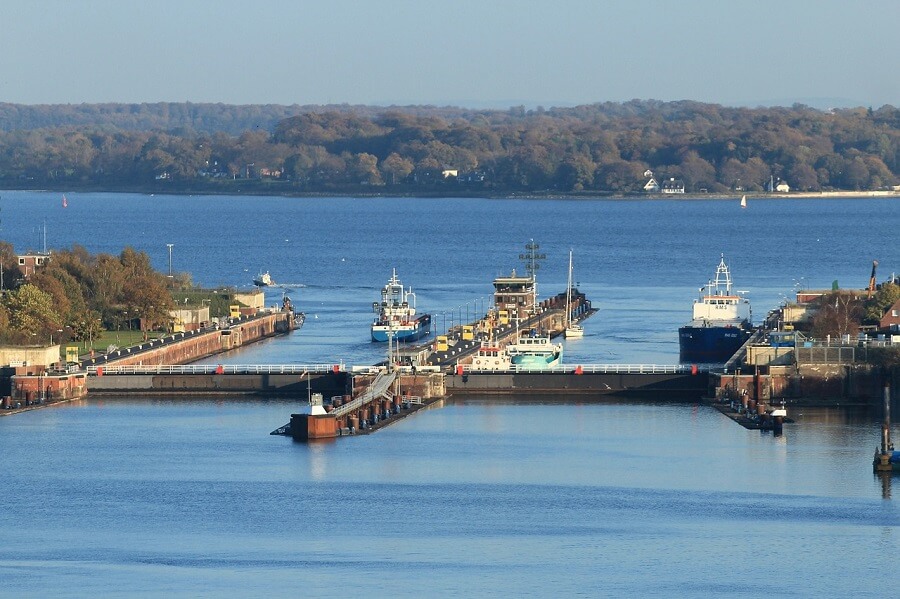
Locks in Kiel-Holtenau
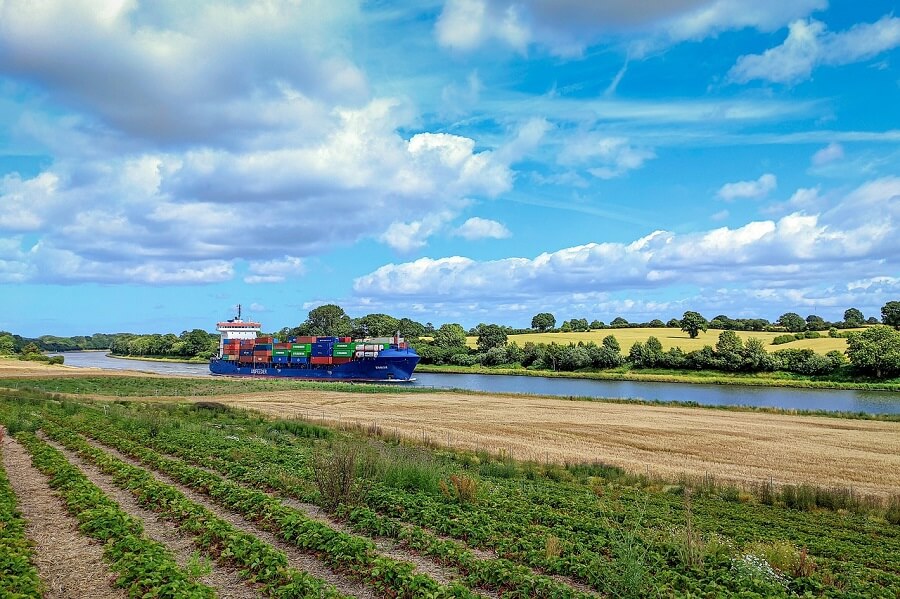
Ships in the Kiel Canal
Today the Kiel Canal is the world's busiest artificial waterway and handles around 32,000 ships annually. That is more than both the Panama Canal and the Suez Canal. The natural scenery along the Canal is remarkably beautiful so it's not a place to miss.
Sylt Island (130 NM)
The North Sea Frisian Islands are a group of small islands amidst shifting sandbanks and shallow channels. It's an interesting area to explore and practice tides. Sylt is the biggest island in the group. We will visit Hörnum harbour at the southern tip of the island.
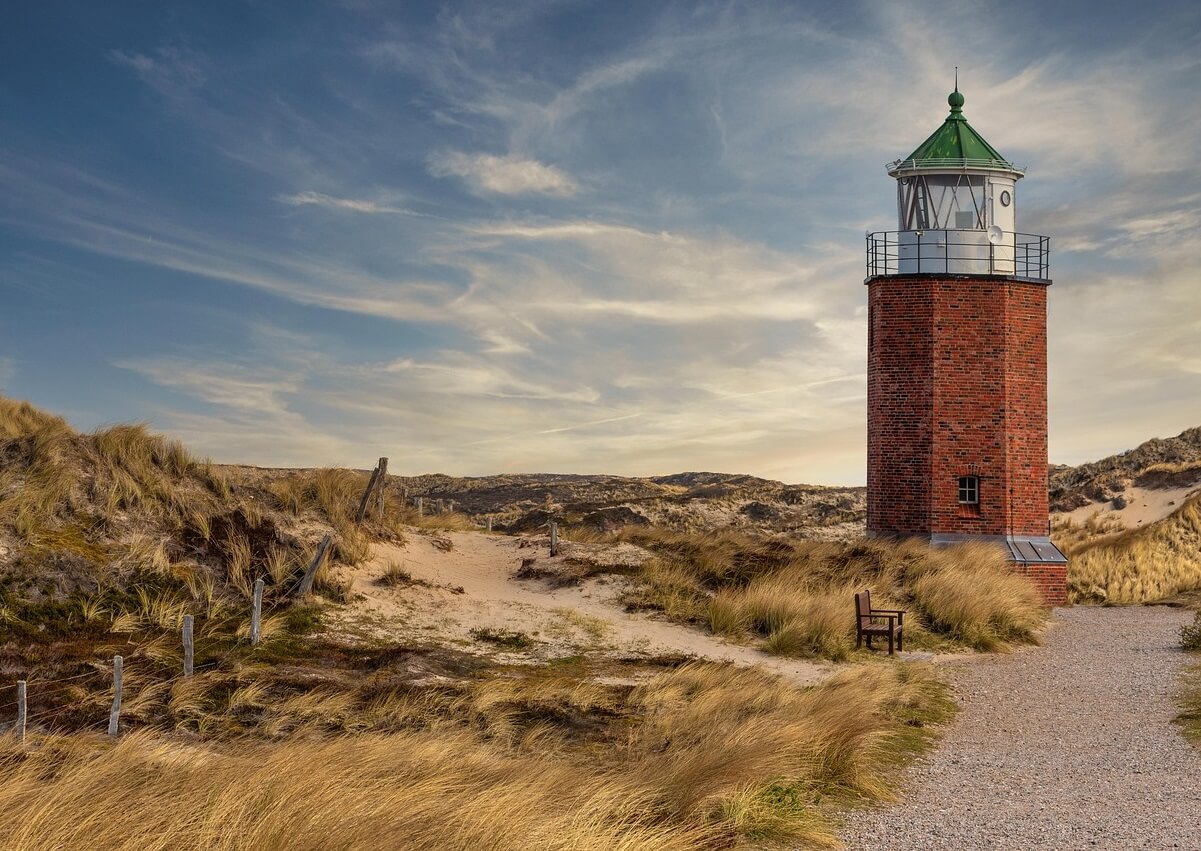
Sylt landscape
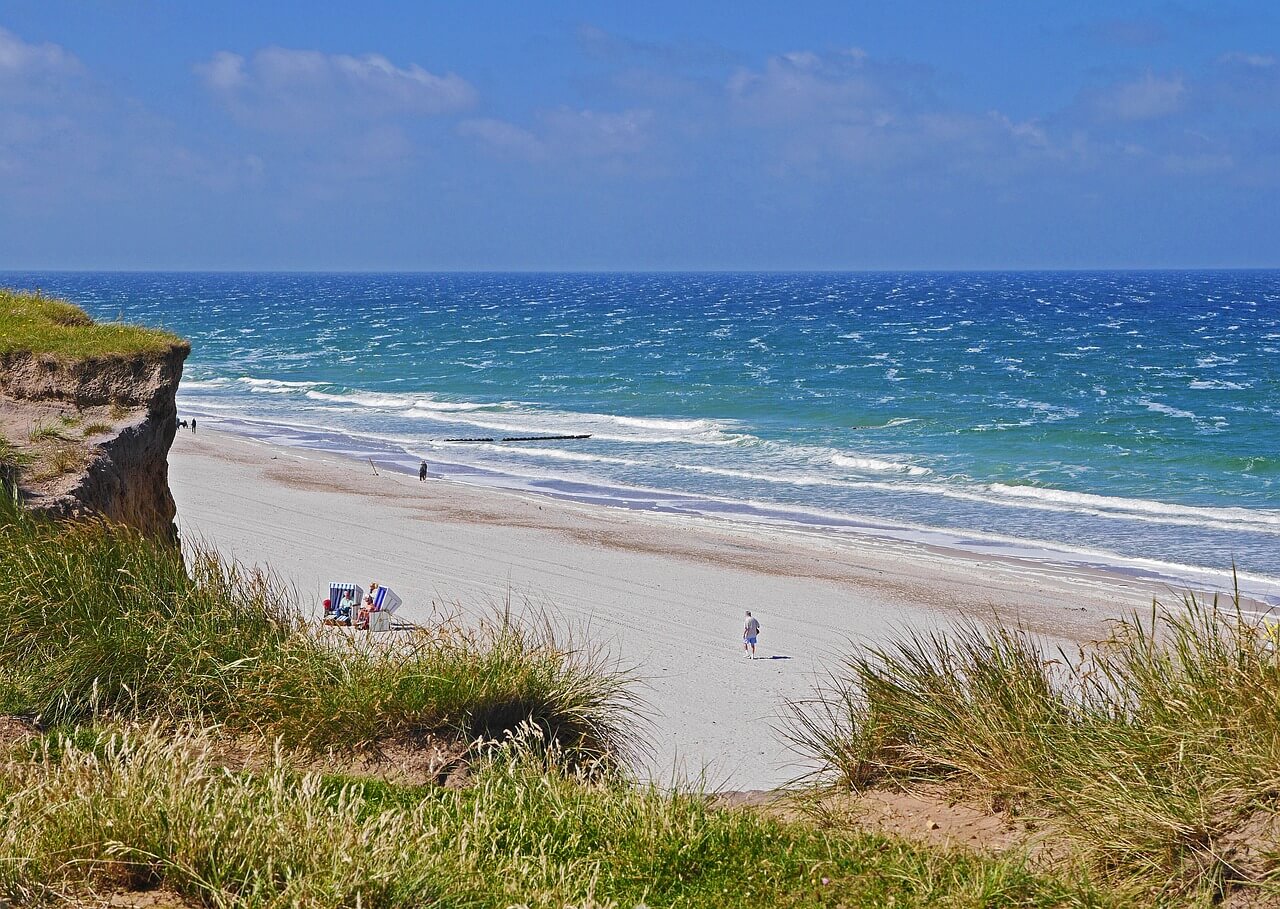
40-kilometre-long sandy beach in Sylt
Sylt is well known for its 40-kilometre-long sandy beach. It is frequently covered by the media in connection with its exposed situation in the North Sea and its ongoing loss of land.
Kristiansand (240 NM)
From Sylt we will undertake the longest offshore passage of the trip, crossing the North Sea and entering the Skagerrak to reach Kristiansand on the southern tip of Norway. The Skagerrak is the strait running between the Jutland peninsula of Denmark and the south coast of Norway, and remains one of the busiest straits in the world. Sailing across this open stretch can be rough due to strong winds and frontal systems, making it an excellent opportunity to log offshore miles and practice watchkeeping, weather routing and night navigation.
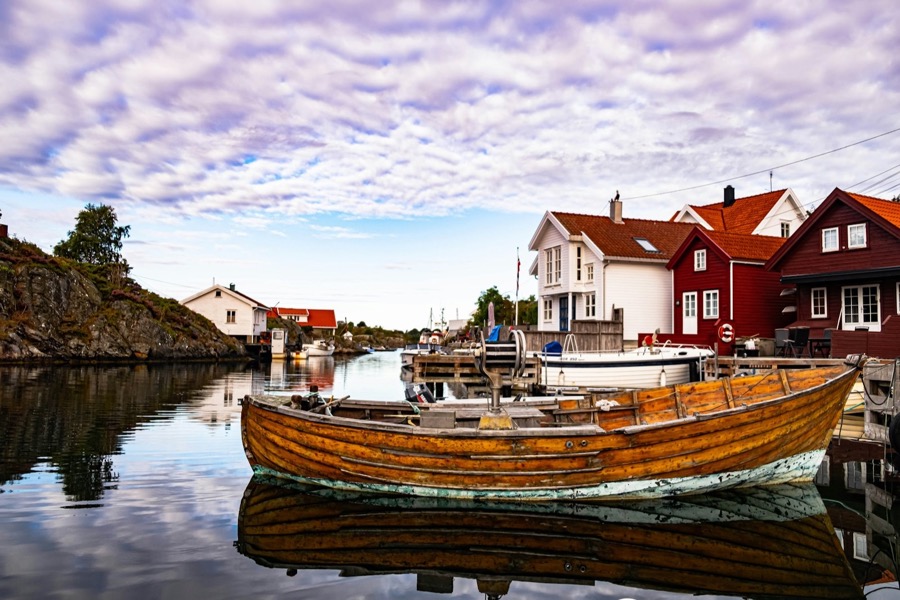
Kristiansand harbour
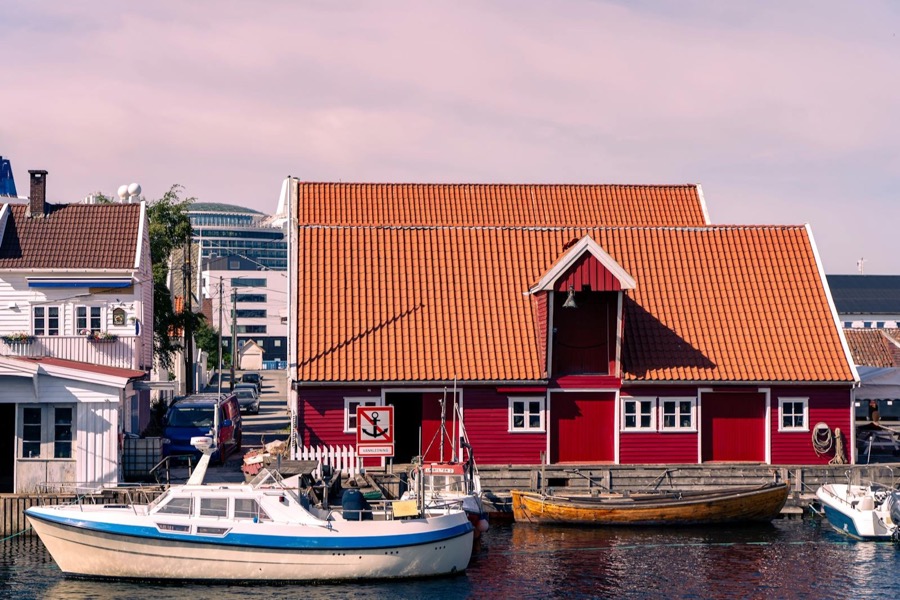
Colourful Kristiansand harbour
Kristiansand is the gateway to the Sørlandet coast - a stunning region of pink granite skerries, sheltered channels and whitewashed wooden villages. Founded in 1641 by King Christian IV and laid out in a distinctive grid pattern, the town centre is compact and walkable. Don't miss Posebyen, one of northern Europe's largest preserved quarters of old wooden houses, the seventeenth-century Christiansholm Fortress guarding the harbour entrance, and Bystranda - a sandy beach right in the heart of the city.
On the passage to Oslo, we hope to spend some time exploring Blindleia, widely regarded as one of the most beautiful stretches of coastline in Southern Norway. Protected by a maze of islands and skerries, it offers spectacular scenery, picturesque villages, and some of the finest coastal sailing in Scandinavia.
Oslo (200 NM)
From Kristiansand we will sail east along the Norwegian south coast and turn north into the Oslofjord, a long and dramatic fjord that cuts roughly 100 kilometres inland to the capital. The coastal route weaves through a maze of skerries, narrow sounds and traditional fishing villages, and is a paradise for cruising sailors.
The approach to Oslo takes us through the Drøbak Sound, the narrowest point of the Oslofjord where the channel squeezes to just a few hundred metres between Oscarsborg Fortress and the mainland. This is an excellent pilotage exercise: commercial traffic is dense, the buoyed channel is tight and the current can run noticeably. Oscarsborg itself is famous for sinking the German cruiser Blücher in April 1940 - the fortress and its torpedo battery are still visible from the deck as you pass.
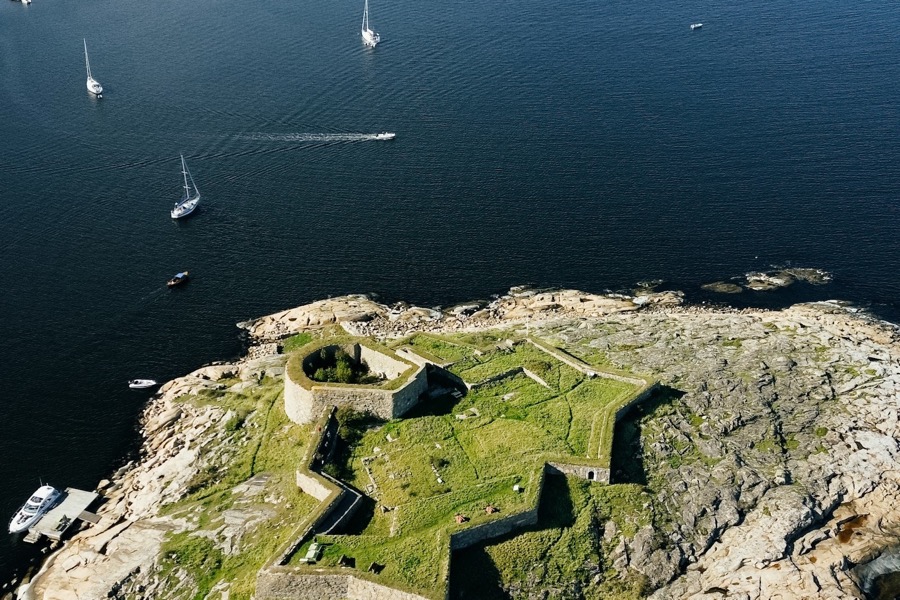
Island fortress in the Oslofjord
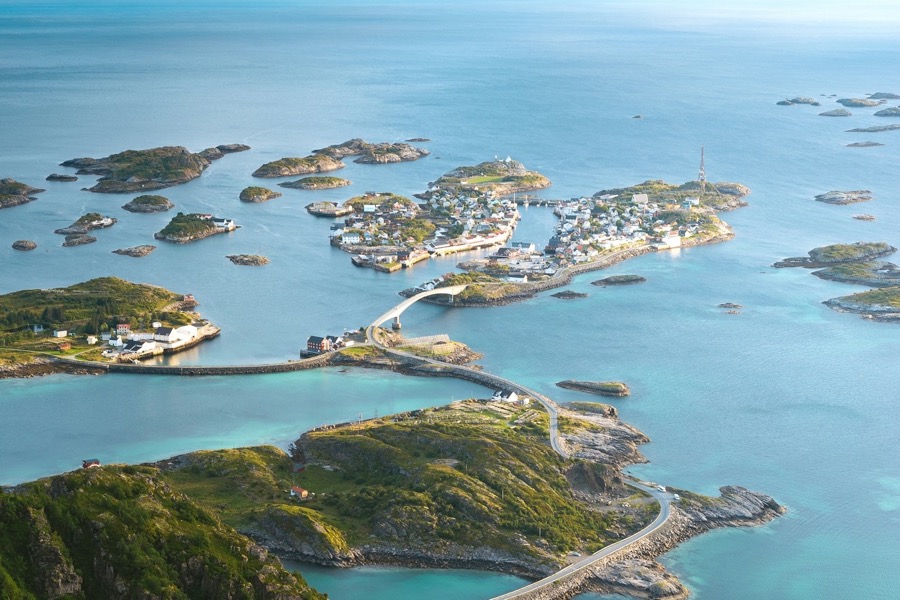
Green islands of the Oslofjord
Oslo, the capital of Norway, sits at the head of the fjord and is a vibrant city with a rich maritime heritage. The redeveloped Aker Brygge and Tjuvholmen waterfront are lined with restaurants and bars, and the iconic Opera House, with its sloping marble roof you can walk on, rises straight out of the harbour. On the Bygdøy peninsula you can visit the Fram polar ship, the Kon-Tiki Museum and the Norwegian Maritime Museum, while the Royal Palace, Akershus Fortress and the Vigeland sculpture park are all within easy reach of the marina.
Check out the FAQ section for common questions.
Still have questions? Please don’t hesitate to contact us. We’d love to hear from you.
- Related articles:
- Routes